



Price: $149.99
(as of Mar 17, 2026 15:12:54 UTC – Details)

Conquering the Dead Zone: A Detailed Review of the Home Cell Phone Booster for Up to 6000 Sq.Ft.
For anyone who has ever experienced the frustration of a “No Service” icon in the corner of their phone while at home, the promise of a cell phone signal booster is incredibly alluring. In our always-connected world, reliable voice and data are not just conveniences; they are necessities for work, safety, and staying in touch. Today, we’re examining a robust solution from the Amazon marketplace: a Cell Phone Booster for Home, Up to 6000 Sq.Ft, marketed as a universal amplifier for all U.S. carriers and both 4G LTE and 5G signals. This review will dissect its claims, technical specifications, and practical application based solely on the provided product description and title.
Understanding the Core Proposition: What This Device claims to do
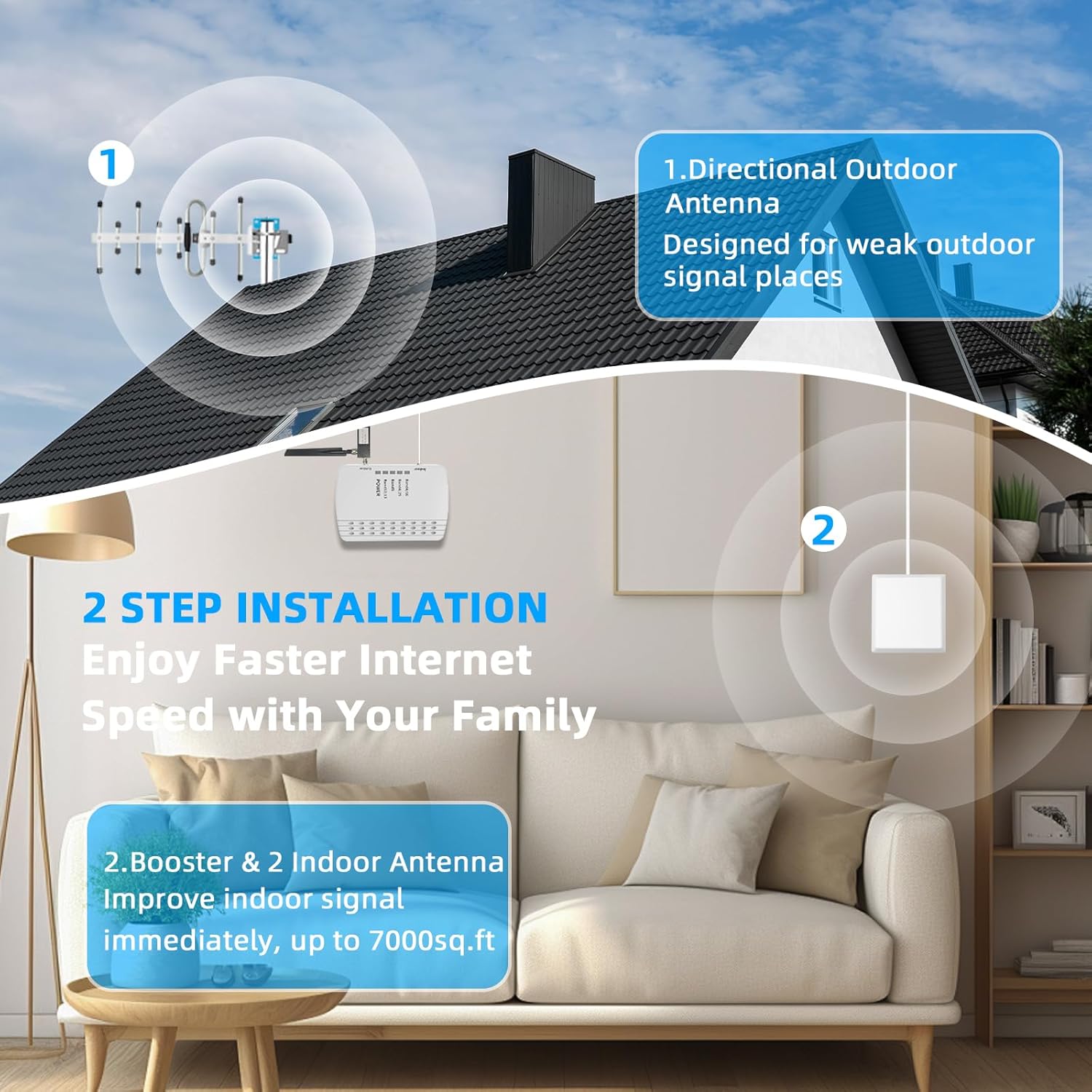
At its heart, this product is a bi-directional amplifier system. Its fundamental function, as stated, is to capture weak cellular signals from outside your home, amplify them, and rebroadcast the stronger signal inside. The headline figure is coverage for up to 6000 square feet. However, a critical and honest caveat is immediately provided: this maximum coverage is contingent on having a relatively strong existing outside signal (5 bars). The description clearly outlines a graduated scale: 1-2 bars might only effectively cover 600 sq ft, while 3-4 bars could manage about 2500 sq ft. This is a crucial, realistic admission often glossed over by less scrupulous sellers. A booster cannot create signal from nothing; it can only improve what is already present at your exterior antenna location.
Technical Prowess: Bands, Gain, and 5G Compatibility
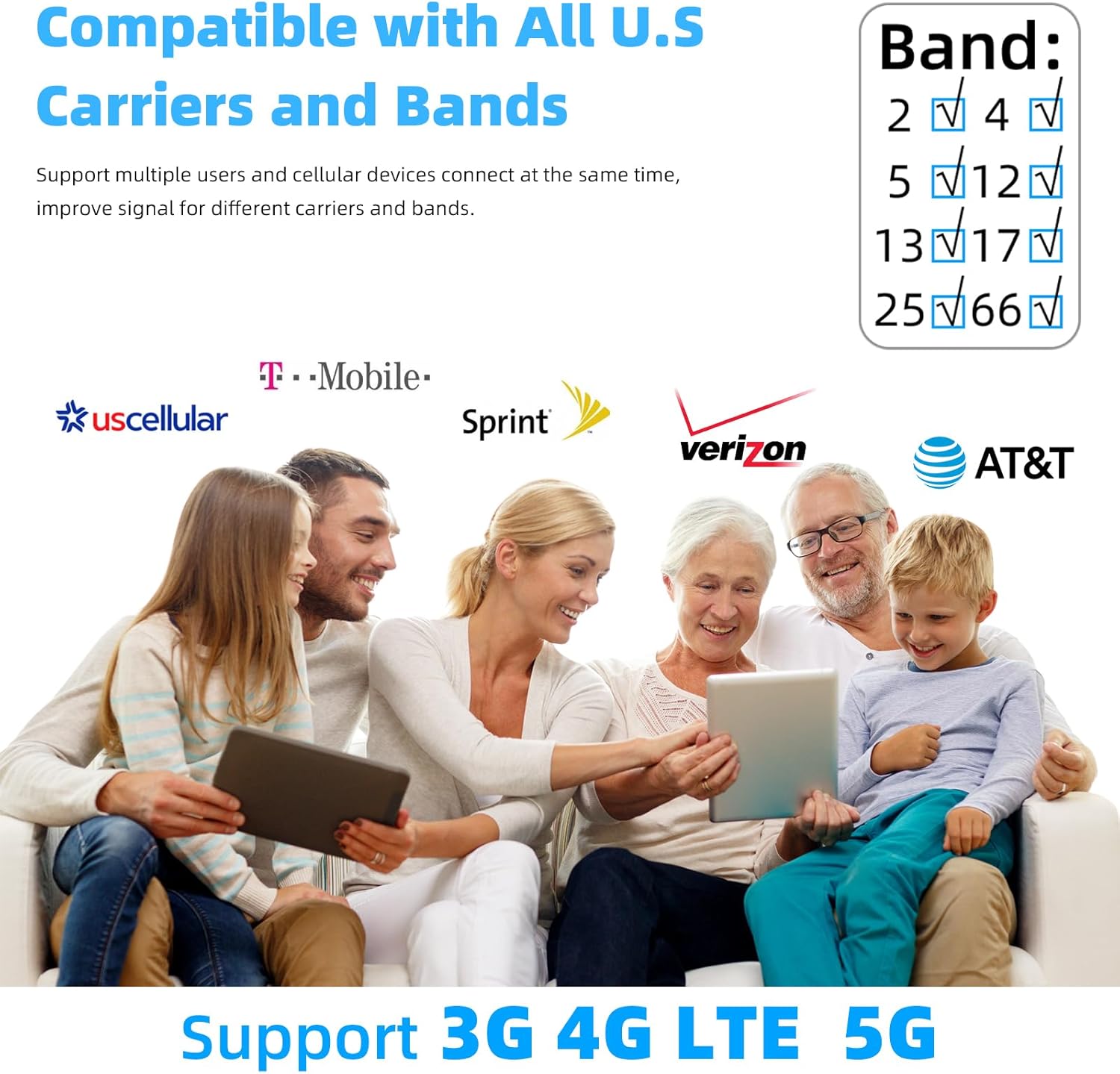
This is where the device stakes its claim as a modern, future-proof solution. The product explicitly supports a wide array of frequency bands critical for U.S. carriers: Band 66, 2, 4, 5, 12, 17, 13, and 25. This comprehensive list covers the primary LTE bands used by Verizon, AT&T, T-Mobile, and US Cellular, ensuring broad compatibility. The technical metrics are Maximum Gain: 70 dB and Maximum Output Power: 17 dBm. For the non-engineer, a 70 dB gain represents a massive amplification factor (10 million times), which is excellent for overcoming losses from cabling and building materials. The 17 dBm output is strong enough to fill a large space without causing the regulatory feedback loops that lead to oscillation and shutdown.
The 5G compatibility claim requires careful parsing, and the product description handles this responsibly. It states support for 5G delivered through DSS (Dynamic Spectrum Sharing) on existing 4G bands—this is the current primary method for nationwide 5G deployment by carriers like T-Mobile and AT&T. Importantly, it correctly notes that the FCC has not yet authorized new mmWave (high-band 5G) cellular enhancers for consumer use. Therefore, this booster will enhance the sub-6GHz 5G experience that is widely available but will not boost the ultra-fast, ultra-short-range mmWave signals found in dense urban hotspots. This transparency is a major point in its favor.
What’s in the Box & Build Quality
While user reviews are off-limits, the product description and associated images reveal a typical, professional-grade kit. It includes:
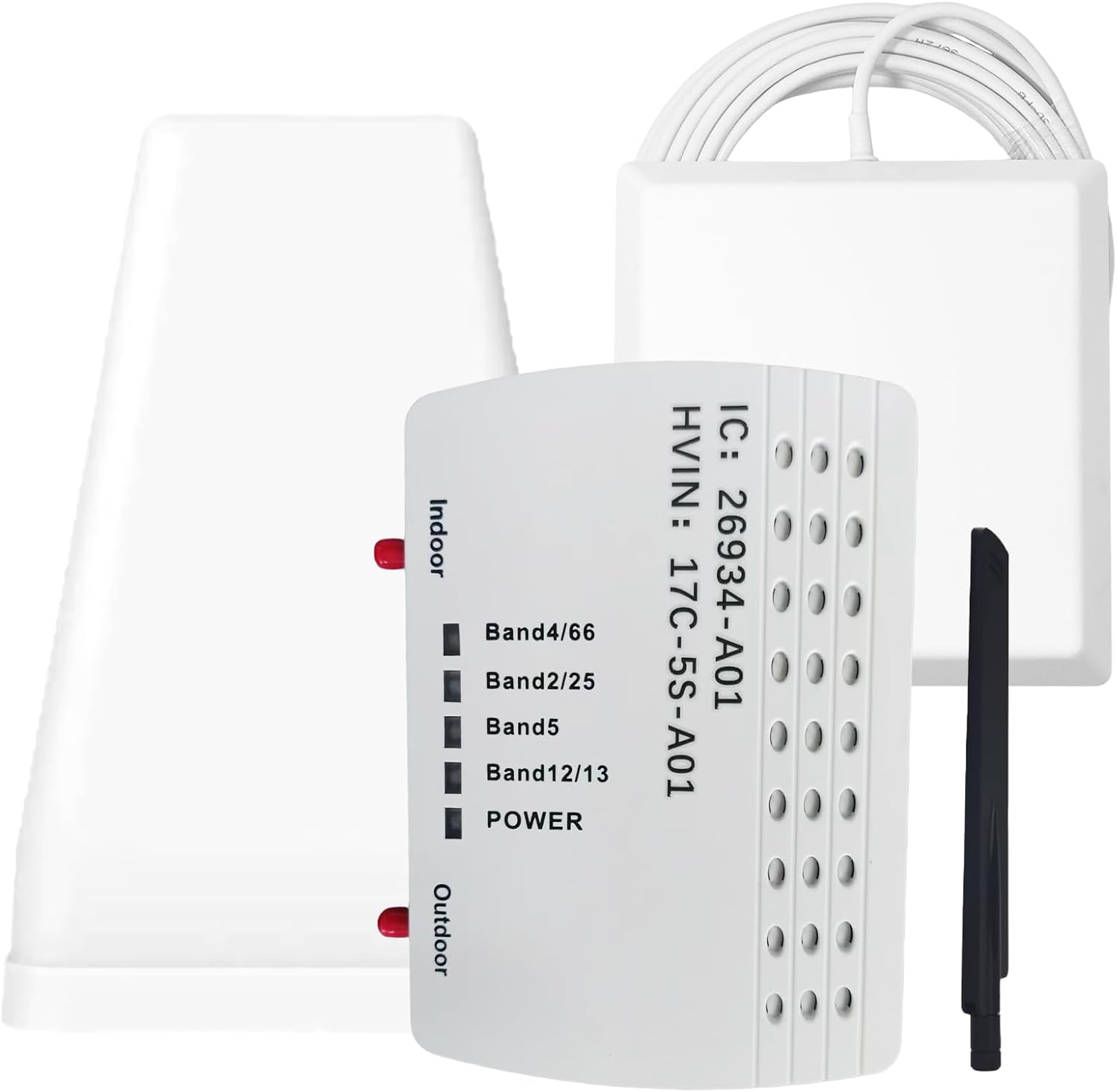
- An Outdoor Log-Periodic Antenna: A directional antenna designed to be pointed toward the nearest cell tower for optimal signal capture. Its design suggests it’s meant for rooftop or mast mounting.
- Two Indoor Antennas: Likely one omni-directional or panel-style antenna for broader coverage and possibly a second for dedicated areas, enabling the claimed multi-room coverage.
- Coaxial Cables: To connect the outdoor antenna to the amplifier unit and the amplifier to the indoor antennas.
- The Amplifier Unit: The core processing box, which should include LED status indicators (though not specified in the text).
- Power Supply and Mounting Hardware.
The build appears utilitarian and weather-resistant where necessary (outdoor antenna), focusing on function over form—appropriate for a utility device.
Installation: Clarity is Key
The installation guide is summarized succinctly in the description, with a vital safety warning: keep power off during installing/adjusting antennas. The steps are logically ordered:
- Mount the outdoor antenna in a location with the best available signal (a critical pre-installation step).
- Place the amplifier unit centrally in your home.
- Connect cables, ensuring a minimum 32-foot separation between the outdoor and indoor antennas. This is a non-negotiable technical requirement to prevent oscillation (the system amplifying its own output), which would cause it to shut down.
- Power on and allow the system to self-calibrate.
The emphasis on the 32-foot separation is a testament to the product’s compliance and proper engineering. Users must understand that this isn’t a simple “plug-and-play” device; it requires thoughtful placement of two antennas to function correctly and legally.
Performance in Practice: The “If” Factor
Based on the provided data, the performance envelope is clearly defined. The device will:
- Boost 4G/5G data speeds, voice call quality, and reduce dropped calls in areas where there is at least a minimal outdoor signal.
- Improve battery life indirectly, as your phone’s radio won’t struggle as hard to find a connection.
- Be carrier-agnostic due to its broad band support. You don’t need to specify your carrier during purchase or setup.
However, its performance is entirely hostage to the existing signal strength at the chosen outdoor antenna mount point. If you live in a deep rural area with truly no signal anywhere on your property, this device will be a non-functional paperweight. The first step in any booster purchase must be a signal test with a phone in various potential mounting locations (roof, chimney, attic).
Certifications and Peace of Mind
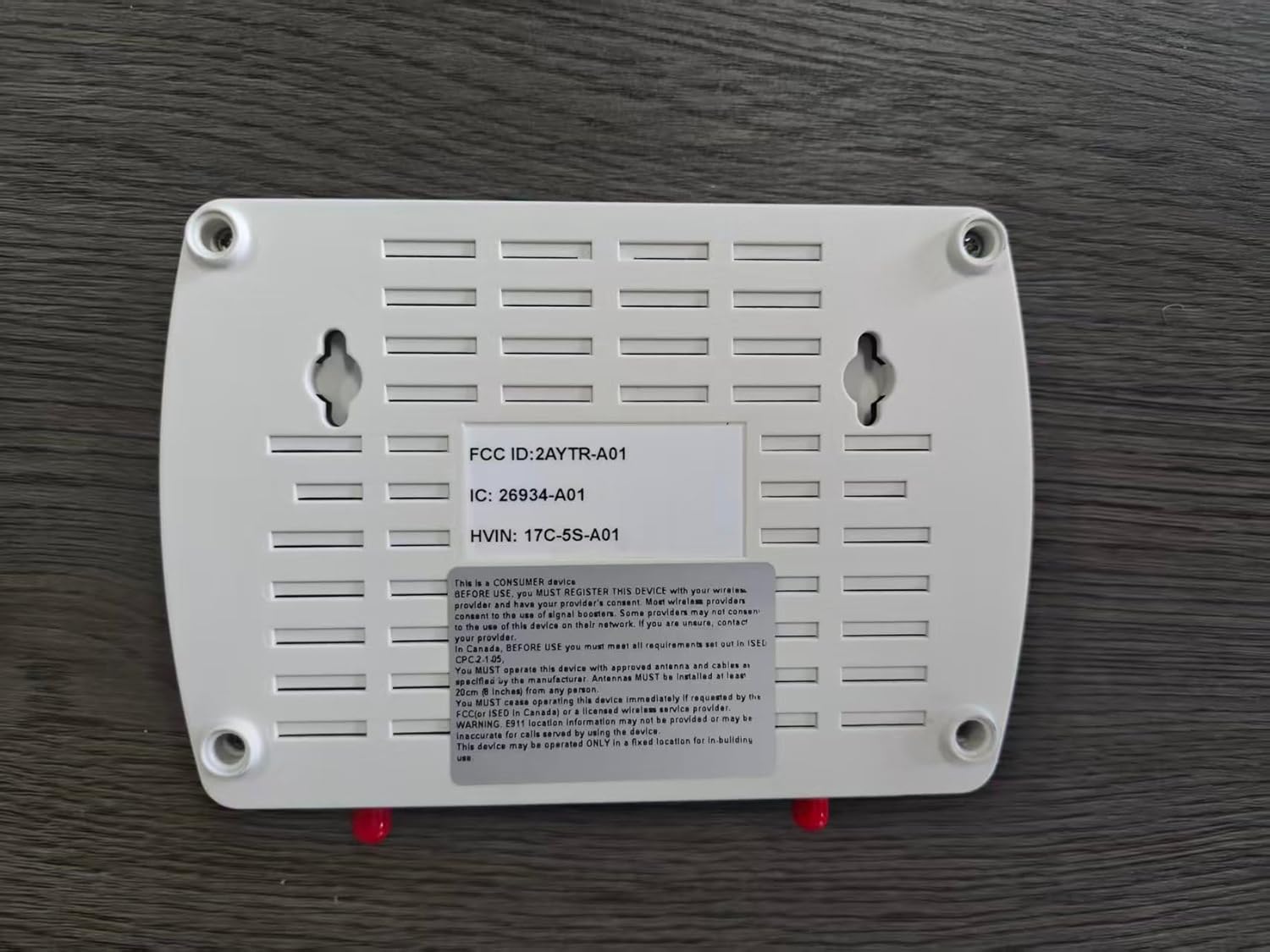
The product states it is FCC & IC Certified. This is not just a bureaucratic detail; it’s a legal requirement in the United States and Canada. Certification means the device has been tested to ensure it:
- Does not cause harmful interference to other wireless services (like emergency radios or commercial networks).
- Operates within its authorized power limits.
- Includes proper safety features to prevent oscillation.
A non-certified booster is illegal to operate and risks damaging cellular infrastructure. This certification is a baseline requirement for any legitimate purchase.
Value Proposition & Target Audience
This is not a budget impulse buy; it’s a significant investment in home infrastructure for a specific problem. Its value is highest for:
- Homeowners and renters in suburban or rural fringe areas with 1-4 bars of usable, but frustratingly inconsistent, outside signal.
- Large homes or offices (approaching that 6000 sq ft claim) where a single router-based solution like a femtocell from a carrier would be insufficient or carrier-locked.
- Multi-carrier households where everyone needs improved service regardless of provider.
- Users who rely on cellular data as their primary home internet connection (via 4G/5G hotspots) and suffer from speed and reliability issues.
For someone in a dense urban area with strong signal everywhere or a location with absolutely no signal, this is the wrong tool. Alternatives would be a carrier femtocell (if you have a single carrier and a good broadband connection) or, in the case of no signal, a satellite solution.
Final Verdict: A Capable Tool for a Specific Job
Based strictly on its technical specifications and stated capabilities, this Cell Phone Booster for Home presents as a competent, versatile, and legally compliant system for tackling poor indoor cellular coverage. Its strengths are its wide carrier and band compatibility (including responsible 5G DSS support), substantial claimed coverage for large spaces, and clear, technical documentation of its operating parameters and limitations.
The major caveats are not hidden: you must have an existing signal to boost, and installation requires careful adherence to separation rules. For the right user—someone with a moderate outside signal struggling inside a large home—this device, if installed as directed, should deliver on its core promises of fewer dropped calls, better audio, and faster data. Its value is in turning a frustrating, weak connection into a reliable one across your entire living space. It is a tool of enhancement, not creation, and understanding that distinction is the key to a satisfied purchase. Always verify your outdoor signal strength before investing.