


Price: $24.59
(as of Mar 17, 2026 20:19:10 UTC – Details)

Zopsc Unlocked Cell Phone for Seniors: A No-Frills, Purpose-Built Communication Lifeline
In an era dominated by feature-packed smartphones with complex interfaces and constant connectivity demands, there remains a clear and pressing need for devices that strip communication down to its absolute essentials. The Zopsc Unlocked Cell Phone for Seniors (Model T618) enters this space not as a budget alternative to a smartphone, but as a purpose-built tool designed for reliability, simplicity, and peace of mind. With its starkly practical design, focusing on tactile feedback, emergency readiness, and unwavering durability, this “big key” phone targets a specific user: seniors, individuals seeking a secondary backup device, or anyone who values a distraction-free calling experience. This review will dissect the device’s design, functionality, and its clear limitations based solely on its provided specifications and feature set.
Design & Physicality: Built for Visibility and Grip
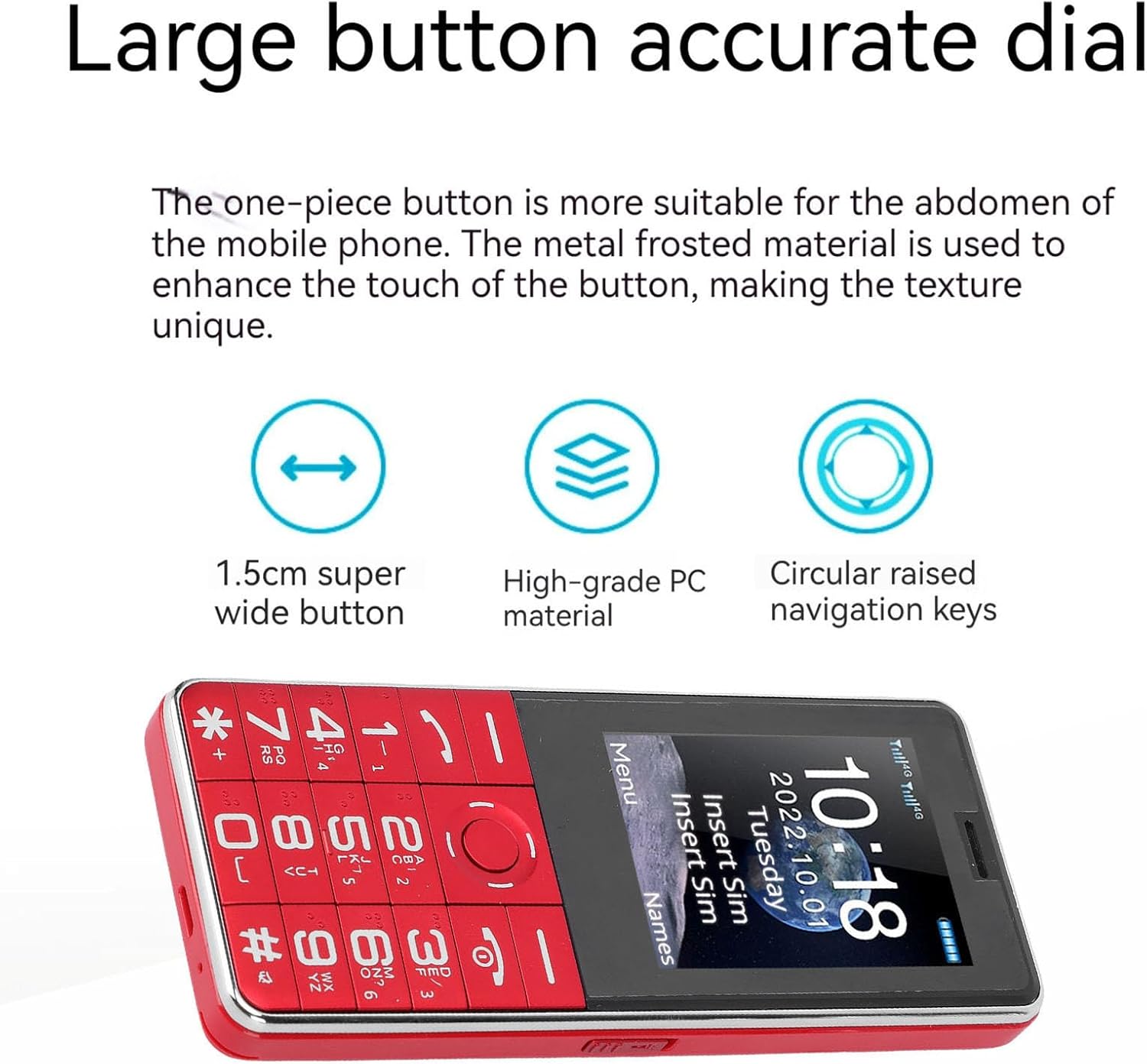
From the moment you handle the Zopsc T618, its design philosophy is evident. The dimensions, approximately 125 x 54 x 15mm, place it in a comfortable “chunky” category. It’s not sleek or meant to slip into a tight jeans pocket; instead, it prioritizes a secure, confident grip. The use of metal and ABS (a durable thermoplastic) in its construction suggests an intent to withstand daily wear and tear. The product description explicitly highlights its “robust and long-lasting design” built with “shock absorption and drop resist.” While we cannot test its mettle here, the material choice and thicker profile inherently convey a device built to survive drops from a counter or a bedside table—common scenarios for its intended users.
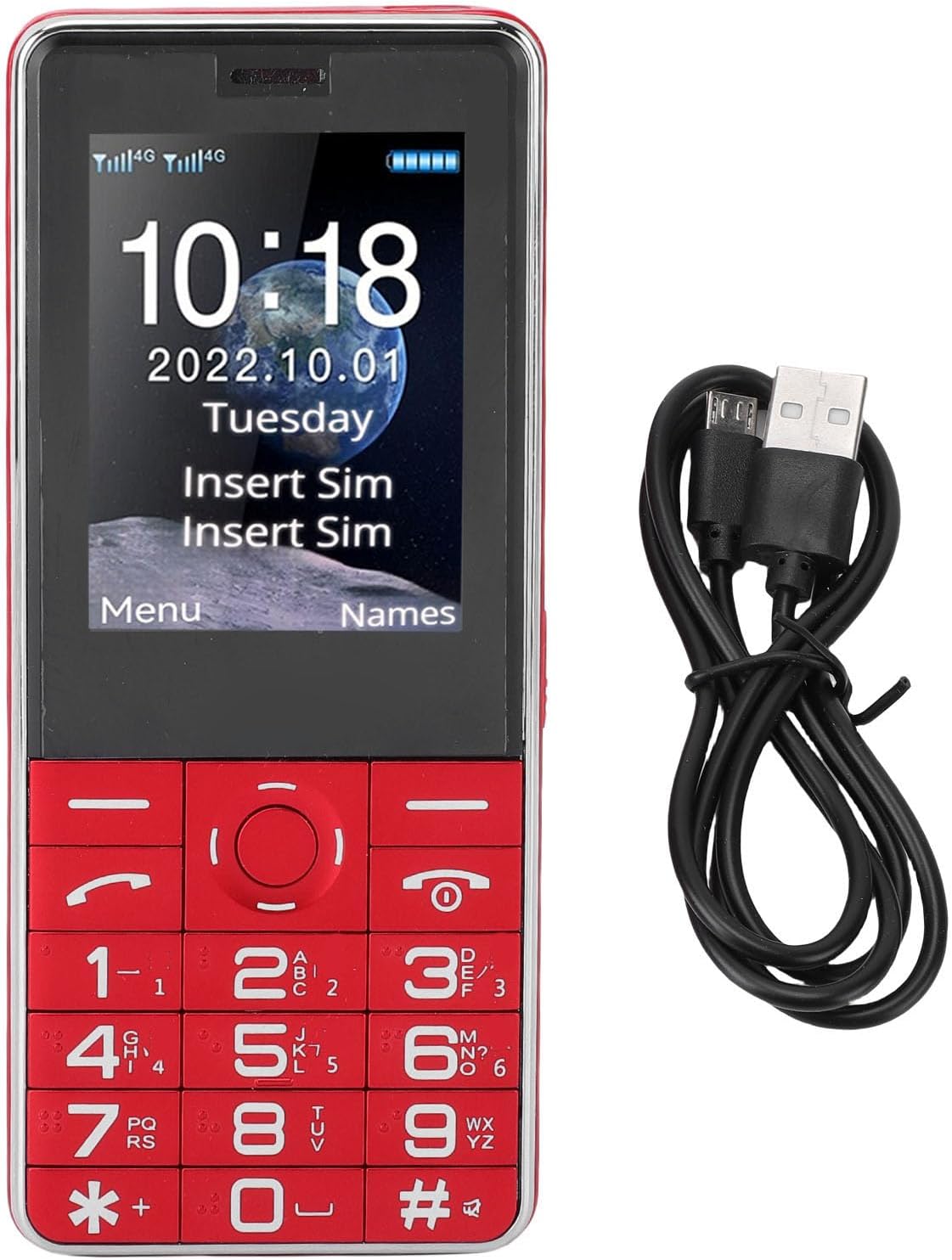
The most defining physical attribute is the 2.4-inch color display. In a world of 6+ inch screens, this might seem minuscule. However, for its purpose, it is a pragmatic size. It is large enough to clearly display large-font menus, caller ID, and text messages without overwhelming the user with excessive information. The screen is paired with the titular large, well-labeled buttons. These are not merely big; they are spaced to minimize accidental presses, with clear, high-contrast markings. For users with diminishing dexterity, arthritis, or visual impairments, this tactile, unambiguous keypad is a paramount feature. The physical act of pressing a distinct, raised button provides reassuring feedback that a capacitive touchscreen cannot replicate.
Core Functionality: The 2G Reality
This is the device’s most critical and restrictive specification. The Zopsc T618 operates exclusively on 2G GSM networks (900/1800 MHz). It explicitly does not support 3G or 4G/LTE. The manufacturer’s note is a crucial warning: “The phone only supports 2G GSM… Please check with your local SIM card carrier to confirm 2G network compatibility.”
This is not a flaw in the phone itself, but a fundamental compatibility question. In many regions, particularly in parts of North America, Europe, and Asia, carriers have been aggressively sunsetting their 2G networks to repurpose spectrum for faster technologies. A user must verify that their chosen carrier (or a Mobile Virtual Network Operator running on a compatible carrier) still maintains an active 2G GSM network in their specific area. For those where 2G is still available, the phone’s utility is clear: it will handle calls and text messages (SMS) with reliability. The description also mentions “basic multimedia like music/video playback,” which is plausible given the 2.4-inch screen and support for microSD cards up to 16GB. However, any data-intensive activity (browsing, social media, video streaming) is impossible. This phone is a communication tool first and last.
Its dual SIM capability is a valuable feature for its target audience. A user could have one SIM for personal use and another for a low-cost, pay-as-you-go plan, or perhaps one for local calls and another for international calls—all managed from a single, simple device. This flexibility adds practical utility without complexity.
The Emergency Lifeline: The SOS Key
The standout feature, and arguably the device’s raison d’être, is the dedicated SOS Emergency key. This transforms the phone from a simple communicator into a potential lifeline. The description states it is “pre-set up to 9 emergency contacts for one-touch access.” The process, as implied, likely involves programming the phone (via its menu system) to store up to nine phone numbers and, when the SOS key is pressed and held, initiate a call (or possibly a cycle of calls) to these contacts in sequence. This eliminates the frantic, fumbling search through a contacts list during a crisis—a moment where every second counts and fine motor skills may fail.
For a senior living alone or someone with medical concerns, knowing that a single, large, unmistakable button on the device can summon help is a powerful security feature. It instills confidence and provides tangible peace of mind for both the user and their family. The implementation’s simplicity is key; there should be no layers of confirmation dialogs after the SOS key is activated.
User Experience & Practical Extras
The user experience is engineered for absolute simplicity. The interface, supporting 14 languages (from English and Spanish to Arabic and Russian), ensures broad accessibility. Icons are described as “clear,” and fonts as “large,” directly addressing common age-related visual challenges. The loud stereo speakers are a necessity for users with hearing difficulties, ensuring the ringtone and the caller’s voice are audible without straining.
Further enhancing its utility as a standalone device are the included calculator and alarm clock functions. These are not afterthoughts but core utilities that replace the need for separate gadgets. The alarm clock is particularly useful for medication reminders or appointments. The phone also includes a standard alarm clock function.
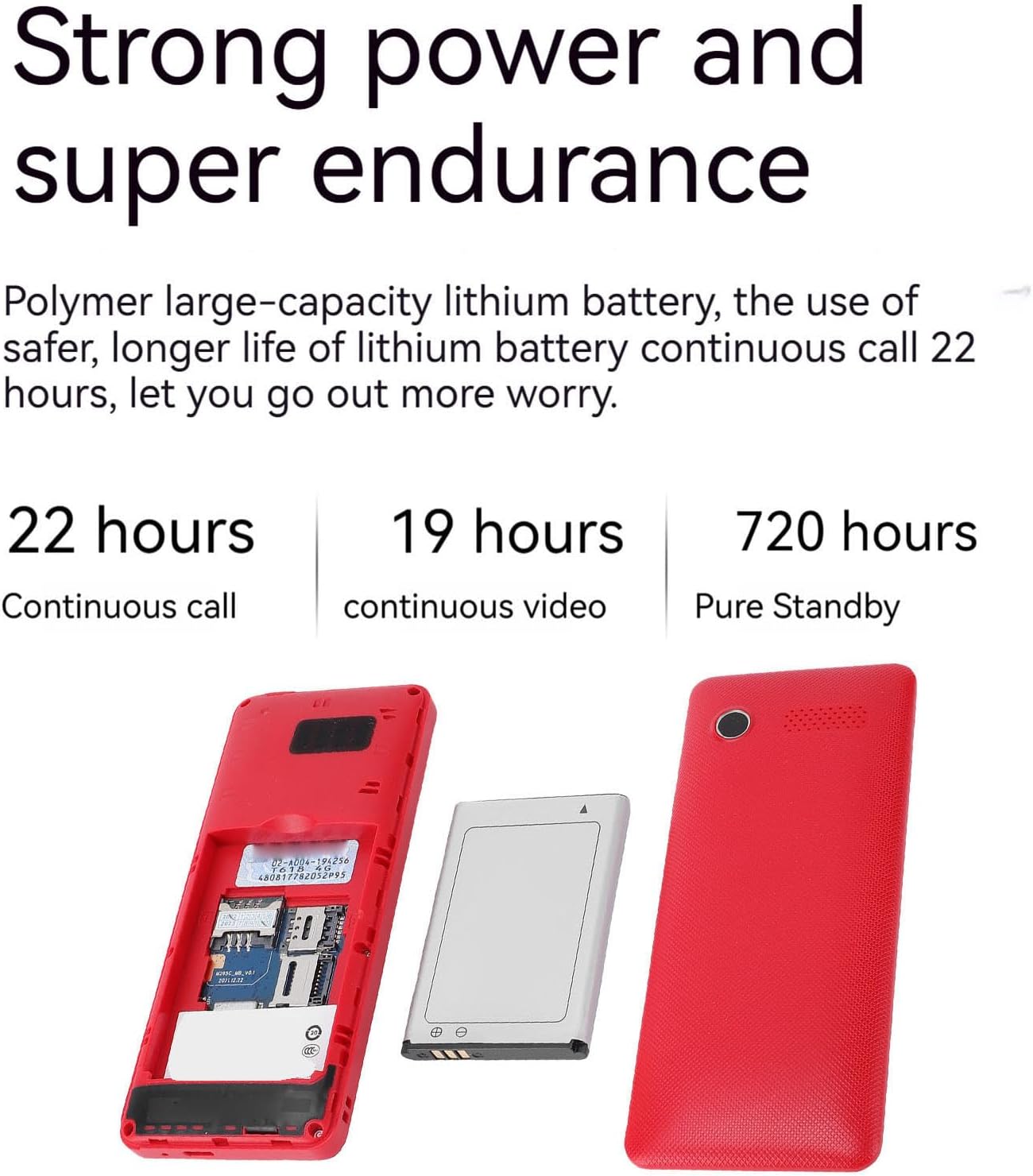
The 4000mAh lithium-ion battery is a significant specification. For a device with a tiny screen, no power-hungry data radio, and basic functionality, this capacity promises exceptionally long standby and talk times—likely measured in days or even weeks between charges. This alleviates the anxiety of frequent charging that smartphone users face and is perfect for someone who may forget to plug in their device nightly. The inclusion of a USB cable and the instruction to “Charge the product before use” is straightforward.
Target Audience & Ideal Use Case
The Zopsc T618 is not for everyone. It is unequivocally not a smartphone replacement for anyone needing mobile internet, apps, GPS, or photography. Its ideal user is precisely described: seniors, children (as a first phone with no internet risks), or as a robust, reliable backup phone.
- For Seniors: It solves the key pain points: complicated menus, tiny buttons, fragile bodies, and short battery life. It provides the essential functions—calling and texting—with maximum clarity and minimum fuss, plus the critical SOS safety net.
- As a Backup/Disaster Phone: Its long battery life and lack of dependency on fast data networks make it perfect to keep in a car, emergency kit, or drawer. If the primary smartphone dies, is lost, or during a power outage, this phone will likely still work and make calls.
- For Minimalists & Digital Detox Seekers: Some adults actively seek a device that can only call and text to avoid distractions. This phone forces that simplicity.
Conclusion: A Niche Masterpiece Defined by Its Constraints
The Zopsc Unlocked Cell Phone for Seniors is a specialist tool, and its value is entirely contingent on the user’s needs matching its very specific capabilities. Its strengths are numerous: an intuitive, tactile interface; a robust, grippy build; an industry-critical SOS function; exceptional battery life; and the flexibility of dual SIMs. It understands the physical realities of its users—vision changes, dexterity issues, a desire for reliability—and engineers solutions directly into its hardware.
However, its single greatest limitation—the exclusive reliance on 2G GSM networks—is also its potential Achilles’ heel. Before purchasing, this must be the first and final check. If your local carrier has shut down 2G, this phone becomes an expensive, non-functional brick. If 2G is still alive and well in your area, the Zopsc T618 represents one of the most honest and focused products on the market. It makes no pretenses. It does not try to be a smartphone. It is a modern take on the classic “brick phone,” refined for a generation that values clear communication and safety above all else. For the right user in the right network environment, it is not just a phone; it is a meticulously crafted communication lifeline.