


Price: $9.99
(as of Mar 17, 2026 23:54:18 UTC – Details)

A Pocket-Sized Breeze: An In-Depth Look at the USB C 2-in-1 Cell Phone Fan
In an era where our smartphones are central to every moment of our day, a common annoyance persists: that sudden wave of heat from the device, whether from intensive gaming, video calls under the sun, or simply using navigation on a road trip. The market has responded with an array of solutions, from cooling pads to external fans. Among these, the Type USB C 2-in-1 Cell Phone Fan presents itself as a uniquely versatile and ultra-portable option. Promising compatibility with a vast ecosystem of devices from Apple, Samsung, and other Android manufacturers, this tiny accessory aims to deliver instant, on-the-go cooling directly from your phone’s power source. But does it live up to its expansive claims, and is it a genuinely practical tool or just a gimmick? This review delves into the product’s specifications, design, and real-world utility based strictly on its provided description.
Unmatched Compatibility: A Fan for Nearly Every Device
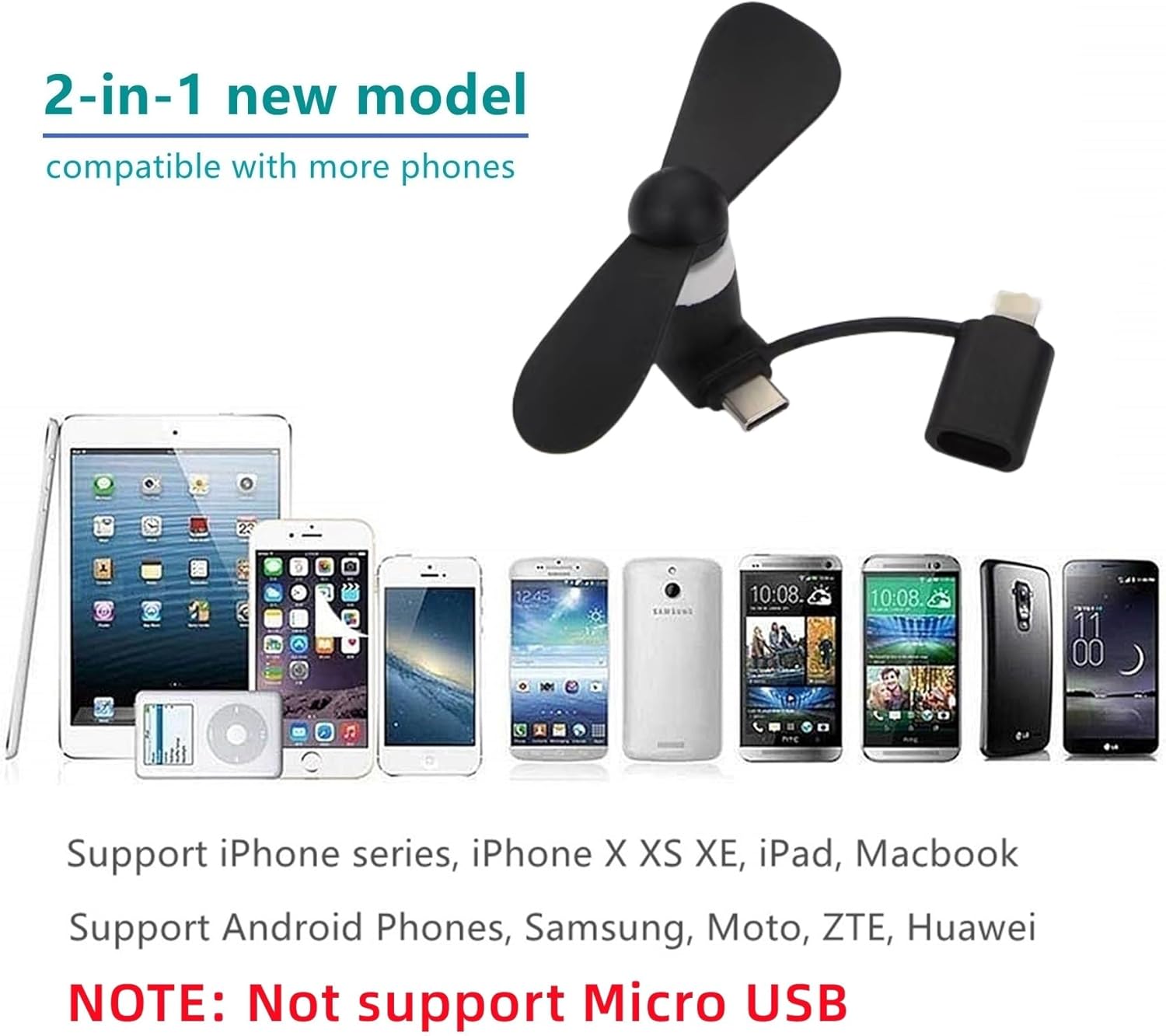
The most striking and primary selling point of this accessory is its purported universal compatibility. The product description goes to great lengths to list supported models, painting a picture of a single fan that can serve a wide audience.
For Apple users, it claims support for an exhaustive range, spanning from the iPhone 4/4S/5 series all the way through the latest iPhone 15, 16, and even hypothetical “17” series, including all variants like Pro, Pro Max, Plus, Mini, SE, X, XS, XR. It doesn’t stop there; compatibility is also extended to iPads, iPod touches, and critically, AirPods models—including the Max, Pro, and various generations with charging cases. This cross-device functionality is unusual for a phone fan and suggests the design leverages the USB-C port (or Lightning via an adapter, though not explicitly stated) purely for power, not data.
For the Android/Samsung阵营, the list is equally extensive. It covers the Galaxy S series from the S8 through to the newly mentioned S25 series, the Note series up to Note 20, the Z Fold and Flip foldables from the 3rd to the 7th generation, and a deep dive into the A-series (A3, A5, A7, A10, A12, A50, etc.) and M-series. It also mentions compatibility with specific Motorola models like the Moto G6, Razr, and Edge series, and generically states it works with “any Android phones with USB C / Type C port.”
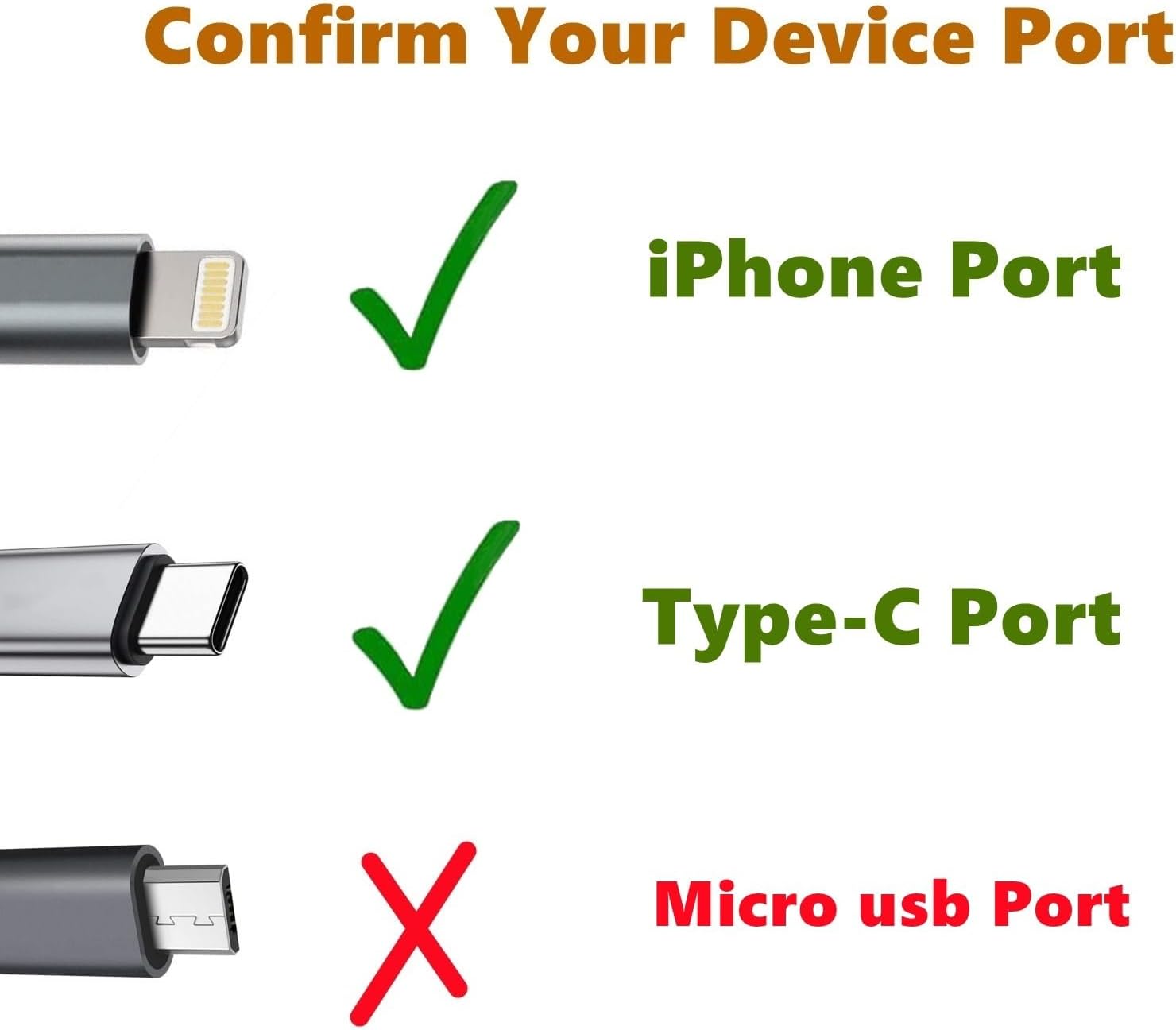
A crucial caveat is provided: a few Android phones require manual OTG (On-The-Go) function activation. The user must navigate to Settings > Other Settings > OTG and enable it. This is a standard requirement for many USB peripherals on Android but is an essential step for the fan to function. Furthermore, the description explicitly states it is NOT compatible with Micro USB ports, listing specific excluded Samsung models (S6, S7, Note5, J series, some M series). This clarification is vital, as Micro USB is still present on some budget or older devices.
Design Philosophy: Portability and Simplicity
The physical design is described as “small and compact” and able to be “divided into two parts,” which is a key feature for pocket or handbag portability. This 2-in-1 detachable design likely means the fan blades and motor housing separate from the USB plug, preventing damage to the delicate connector when not in use and allowing for easier storage.
The aesthetic, judging from the placeholder image references, appears to be a minimalist black plastic unit. The focus is clearly on function over form. It’s a utilitarian tool designed to be plugged in, used, and unplugged without fuss.
Safety and Performance: Soft Blades and Smart Protection
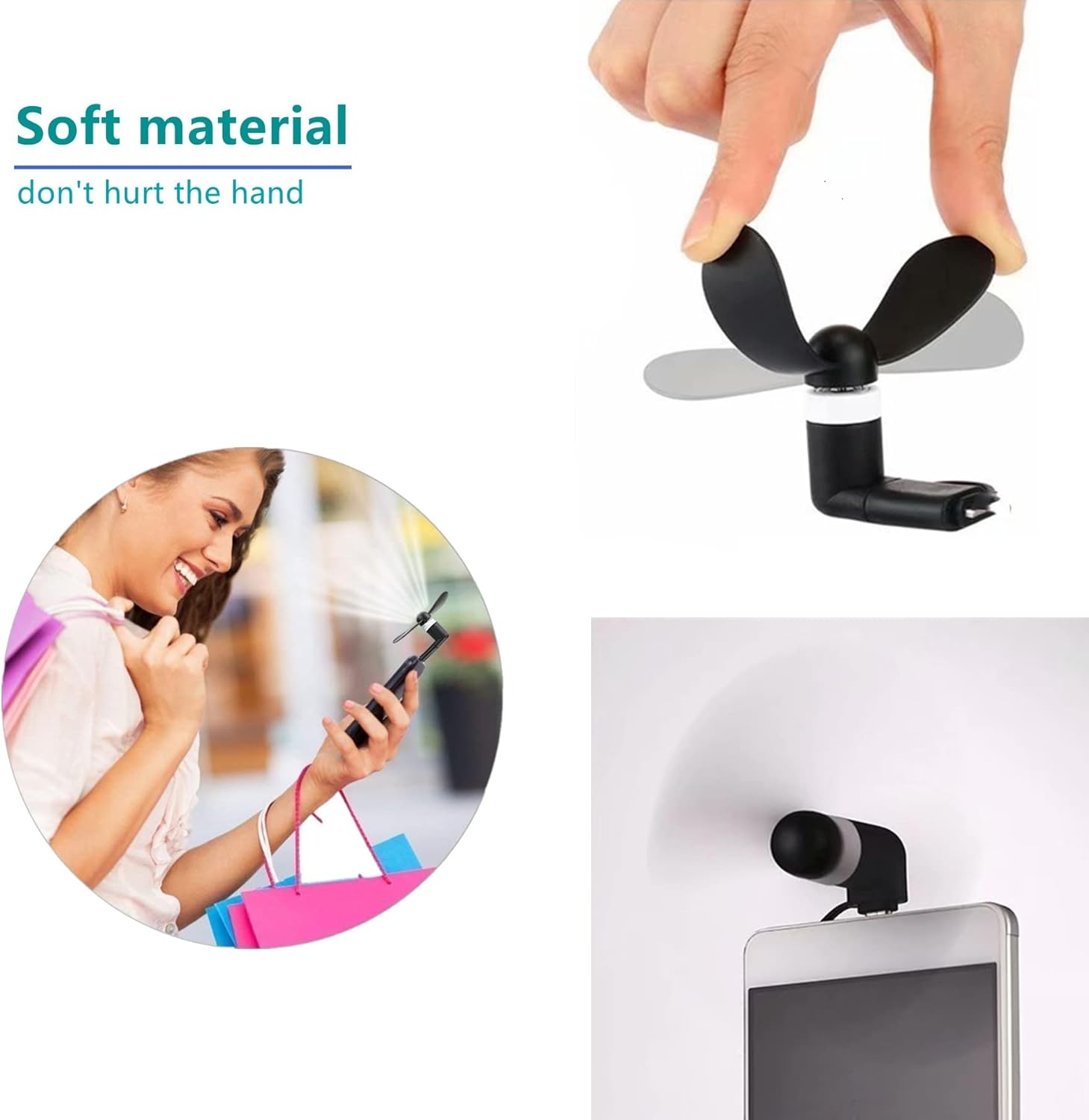
Concerns about safety are addressed head-on. The fan utilizes two soft TPE plastic rotating blades. The material choice (Thermoplastic Elastomer) is significant—it’s flexible and rubber-like, designed to minimize injury if accidentally touched during operation. More importantly, the product incorporates an “automatic touch stop function.” If a finger or other object contacts the blades, they will stop immediately. This is a critical safety feature for an accessory that will inevitably be used while holding a phone.
Under the hood, an IC protective plate is mentioned. This circuitry is intended to regulate power draw from the phone’s battery, preventing overdraw that could damage the device’s port or internal components—a valid concern for any powered USB accessory. The motor is claimed to spin at 16,000 RPM, which is quite fast for a miniature fan, suggesting it should generate a perceptible breeze. The description also notes it should be “smooth and ultra-quiet,” though it acknowledges a potential issue: “If it turns too slowly or noisy, please pull it out and plug again.” This hints at possible connection or power delivery inconsistencies that a simple reseat might fix.
Usage Experience: Plug-and-Play (Mostly)
The operation is described as breathtakingly simple: “Simply connect to iPhone and fan blades will instantly start to rotate.” This plug-and-play simplicity is a major advantage. There are no batteries to charge, no Bluetooth pairing, and no separate app to download. The fan draws minimal power directly from the phone’s USB-C port. The instant activation means you get relief the moment you feel your device heating up.
However, the necessity for OTG activation on certain Androids adds a minor step for some users. The performance will also be inherently limited by the phone’s battery and power management system. A phone with a low battery or aggressive power-saving mode might not supply enough current for the fan to reach its full 16,000 RPM speed.
Target Audience and Practical Applications
This fan is not for everyone. Its ideal user is someone who:
- Frequently uses their phone in hot environments (outdoors, in cars without AC).
- Engages in processor-intensive tasks like mobile gaming, video editing, or lengthy video conferences.
- Values minimalism and dislikes carrying separate, bulky cooling gadgets or cables.
- Owns a device with a USB-C port (or Lightning, with an unmentioned adapter) and is aware of the OTG setting.
It’s perfect as a novelty or emergency item for travelers, students in warm classrooms, outdoor enthusiasts, or influencers recording in sunny locations. Its ability to cool AirPods charging cases is a niche but clever bonus, as those can also generate heat during fast charging.
Critical Considerations and Potential Downsides
Based solely on the description, several practical considerations emerge:
- Power Drain: It will consume your phone’s battery. While the draw is likely small (a few hundred mA), prolonged use during heavy tasks could contribute to faster depletion.
- Obstructed Port: Using the fan means your USB-C port is occupied. You cannot charge and fan simultaneously unless your phone has multiple ports or you use a splitter (which may complicate power delivery).
- Durability Questions: The “divided into two parts” design is great for portability but introduces a potential point of failure—the connection between the two halves. Repeated plugging/unplugging could loosen this joint.
- Actual Airflow: A 16,000 RPM micro-motor is fast, but the sheer size of the blades will likely produce a focused, personal breeze rather than a broad cooling effect. It cools the immediate area around the phone’s port and back case, not the entire device uniformly.
- The “2-in-1” Mystery: The title promises a “2-in-1” function, but the description only details the fan. The second function is not explained. It could be a misinterpretation (perhaps meaning it works with both iPhone and Android), or it might refer to the detachable design having a secondary use (e.g., as a simple cable plug protector), but this is not specified.
Conclusion: A Niche, Low-Cost Solution with Clear Limitations
The USB C 2-in-1 Cell Phone Fan is a clever, low-cost accessory that solves a specific, minor inconvenience. Its greatest strength is its minimalist, no-battery-required design and shockingly wide compatibility list for modern devices with USB-C or Lightning. The inclusion of safety features like soft blades and an auto-stop function shows thoughtful design for a product in this category.
However, its utility is constrained by real-world physics and phone usage patterns. It does not replace a proper cooling case or pad for sustained, high-performance tasks. It is a tool for personal, momentary relief—a direct breeze for your hands and the phone’s immediate vicinity. The requirement for OTG on some Androids and the complete exclusion of Micro USB devices are important to note.
For under $10 (with price variations noted in the description), it’s a low-risk purchase for the right user. If you have a USB-C phone and often find yourself needing a quick, personal cool-down while using your device, this fan delivers on its core promise with simplicity. Just manage expectations regarding battery impact, port obstruction, and the focused nature of the airflow. It’s less of a performance enhancer and more of a comfort accessory—a tiny, personal ceiling fan for your smartphone.