



Price:
(as of Mar 17, 2026 15:09:01 UTC – Details)

The Ultimate All-in-One Wireless Audio Solution for Modern Creators: GoorDik 4-in-1 Lavalier Microphone Review
In the fast-paced world of content creation, clear, reliable audio is non-negotiable. Whether you’re filming a vlog on your iPhone, recording a podcast on your PC, or capturing cinematic footage with a camera, background noise can ruin even the most visually stunning video. Enter the GoorDik Wireless Lavalier Microphone—a system marketed as a 4-in-1 universal solution with active denoise technology, promising to eliminate the hassle of incompatible gear and poor sound. But does it live up to its ambitious claims? After a thorough examination of its specifications, design, and stated capabilities, here’s an in-depth review for the discerning creator.
Design & Build: Clipping On with Confidence
First impressions matter, and the GoorDik system arrives as a compact, well-considered kit. The core components are two identical transmitter units (each housing the microphone and a battery) and a single receiver unit. The standout design feature is the rotatable microphone clip on each transmitter. This isn’t just a static clip; it swivels, allowing you to perfectly orient the omnidirectional mic capsule toward your mouth regardless of how the clip is attached to a collar, lapel, or strap. This level of adjustability is a significant practical advantage over fixed-clip alternatives, ensuring optimal pickup in various recording setups.
The build feels lightweight yet durable, using a combination of matte plastic and metal components that should withstand regular travel and use. The kit includes essential accessories: two furry windscreen “muffs” for outdoor shooting and four foam mic covers for indoor or controlled environments. This thoughtful inclusion addresses one of the biggest pitfalls of lavalier mics—wind noise—without requiring an immediate separate purchase. The overall aesthetic is discreet and professional, easily hiding under a shirt without drawing unwanted attention on camera.
Sound Performance: The Heart of Denoise Technology
The headline feature is Superior Sound with Active Denoise. According to the product description, the system employs “advanced active denoise technology” with dual noise reduction modes: a dedicated “Noise Reduction Mode” and an “Original Sound Mode.” This is the core of its value proposition.
In theory, the active denoise circuitry works to analyze and suppress consistent ambient noises—like air conditioning hum, traffic rumble, or crowd murmur—while preserving the clarity and tone of your voice. The “Original Sound Mode” effectively bypasses this processing, offering a flat, uncolored signal useful for controlled studio environments or when you want to apply your own noise reduction in post-production. The inclusion of the windscreens is critical here; they physically block turbulent air from hitting the mic diaphragm, which is a different, often more severe problem than electronic noise. For a user filming on a windy street or in a café, this combination of physical and electronic noise management is powerful. The description claims “crystal-clear audio even in noisy and windy environments,” and if the implementation is competent, it should outperform a standard smartphone or camera microphone by a significant margin.
It’s important to note a key clarification from the product’s FAQ: this microphone does not amplify your voice. Its job is to capture and transmit a clean, clear version of your spoken audio to your recording device. It improves signal-to-noise ratio but does not act as a microphone preamp or a hearing aid. Your recording device (phone, camera, computer) still handles the final amplification and output.
Universal Compatibility: The “4-in-1” Promise Realized?
This is where the GoorDik aims to be a true Swiss Army knife. The system includes four different connector adapters plugged into the receiver:
- USB-C Connector: For modern Android phones (Samsung, Google Pixel, etc.), iPhones (via the separate included adapter), iPads, and other USB-C devices.
- Lightning Connector: For older iPhones and iPads.
- 3.5mm TRRS Connector: For cameras, camcorders, and some older computers or audio recorders with a dedicated mic input.
- USB Adapter (likely USB-A): For connecting to a PC or Mac’s standard USB port.
This comprehensive kit means you can theoretically use the same microphone system with your iPhone for TikTok, your Android for YouTube, your DSLR for a documentary, and your desktop for podcasting. The description explicitly mentions compatibility with a wide range of devices, from “iPhone 15 USB C” to “Pocket 3” and various cameras.
However, achieving this universality requires some user-side configuration, as detailed in the product’s own FAQ:
- For Android Phones: You may need to enable the OTG (On-The-Go) function in your phone’s settings. Furthermore, you might need to navigate to sound settings to select the external microphone as the “Default Recorder” or use a third-party camera app like “Open Camera” that allows external audio input. This is a common requirement for Android’s fragmented ecosystem, but it’s a vital step that could confuse less tech-savvy users.
- For 3.5mm Connections: The receiver has a 3.5mm TRRS port with multiple modes. If it doesn’t work on your camera or computer, you must short-press the power button on the receiver to cycle through its compatibility modes until you find one that works. This is a clever workaround for different TRRS pin configurations but adds a layer of trial-and-error.
- For Computers (PC/Mac): You must manually set the GoorDik receiver as the default input device in your operating system’s sound settings. It won’t auto-switch.
These steps are not deal-breakers for anyone familiar with audio gear, but they are crucial caveats. The “plug-and-play” claim is true only after you’ve successfully navigated these initial device-specific setup hurdles. The system is compatible, but not always effortlessly.
Battery Life & Power Management: Long Days of Recording
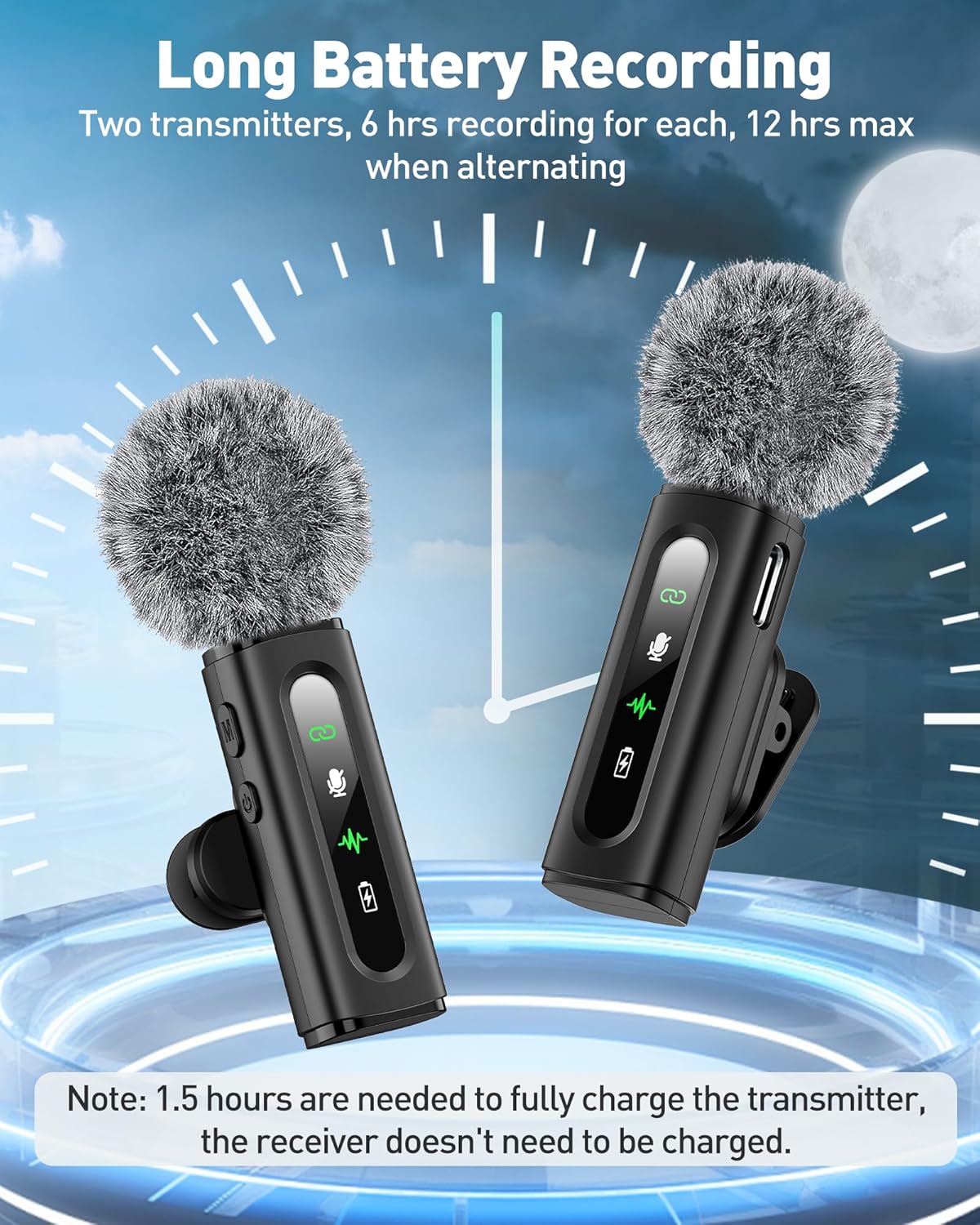
A wireless system is only as good as its runtime. The GoorDik states each transmitter houses a 60mAh battery, offering 6-12 hours of usage on a single charge. The math is explained: one transmitter lasts ~6 hours, but with two transmitters (presumably for interviews or multi-person content), you can swap between them for a total of ~12 hours of continuous recording. This is excellent for a full day of shooting or back-to-back podcast sessions.
Charging is handled via a single one-to-two USB-C charging cable that can juice up both transmitters simultaneously. A thoughtful touch is the USB-C port on the receiver itself, which allows you to charge your phone while it’s connected to the receiver. This is a game-changer for mobile creators; if your phone’s battery is depleting from screen use and processing video, the receiver can act as a power bank, preventing a mid-shoot shutdown. This feature alone adds significant practical value.
Usability & Intuitive Operation
The system is designed for speed. The receiver has a clear LED indicator that shows connection status, battery level, and mode (NR/original/mute). The transmitter has its own status light. The mute function is a simple press on the transmitter, vital for private moments during a continuous take. The rotatable clip, as mentioned, makes physical setup a breeze. The entire system is truly portable—it weighs very little and fits in a small bag alongside your camera or phone.
The described “easy to set” nature is relative. Physically connecting the correct adapter and clipping on the mic is simple. The complex part is the initial software/driver/hardware handshake with each device type. Once configured for a specific phone or computer, it should remember the setting, making subsequent use straightforward.
Ideal Use Cases & Target Audience
This microphone is perfectly tailored for the solo or small-team content creator who works across multiple platforms and devices. It shines for:
- Vloggers & Travel Filmmakers: The wireless freedom and wind protection are ideal for on-the-go shooting with phones or action cameras.
- Social Media Creators (TikTok, Instagram Reels, YouTube Shorts): The quick setup and direct connection to iOS/Android phones enable high-quality, vertical video creation without bulky gear.
- Podcasters & Interviewers: Using two transmitters allows for clean, separate audio tracks from two people, whether recording on a computer via USB or a handheld recorder.
- Camera Operators: The 3.5mm output seamlessly integrates with DSLRs, mirrorless cameras, and camcorders, upgrading the internal mic’s quality dramatically for interviews, presentations, or documentary work.
It is an excellent gift for a budding creator because it solves several problems (noise, compatibility, portability) in one package, reducing the barriers to producing professional-sounding content.
Drawbacks & Considerations
No product is perfect. Based on the provided information, potential drawbacks include:
- No Signal Boost/Amplification: It’s a capture device, not a booster. If your recording device’s preamp is noisy, that noise will still be present in the recording.
- Android Complexity: The OTG and app permissions requirement is a significant friction point for Android users, though it’s an OS limitation, not necessarily the mic’s fault.
- 3.5mm Mode Switching: The need to cycle through modes for camera compatibility is an extra step that could interrupt a fast-paced shoot.
- Transmitter Battery Size: 60mAh is small. While 6 hours is good, heavy daily use might require nightly charging. The ability to charge via the receiver’s USB-C port is a major mitigation, but the transmitters themselves still need their dedicated cable.
- True Wireless Range: The description says “Wide Distance” but doesn’t specify a range (e.g., 30m, 100m). For most vlogging and interview scenarios, this is fine, but it’s a spec to verify for extreme sports or large-event coverage.
Final Verdict: A Versatile Workhorse for the Multi-Device Creator
The GoorDik 4-in-1 Wireless Lavalier Microphone system is a compelling and highly practical tool for anyone serious about audio quality across a diverse range of devices. Its greatest strength is its ambitious universal compatibility, backed by a solid accessory kit (windscreens, multiple adapters) and the crucial phone-charging feature on the receiver. The active denoise technology, if it performs as described, offers a tangible upgrade over basic wired lavaliers or phone mics in challenging environments.
It requires a modicum of technical patience for initial setup—especially on Android—but once configured, it delivers on the promise of a single, portable audio solution for iPhone, Android, PC, and camera. The rotatable clip is a masterclass in user-centric design, and the long battery life, especially with the ability to keep your phone powered, makes it reliable for long recording sessions.
Who should buy it? The creator who shoots with an iPhone for social media, a DSLR for YouTube, and a PC for podcasts. The person who hates juggling multiple microphones and cables. The beginner who wants a serious upgrade without a professional audio engineer’s budget.
Who should hesitate? Someone who only ever records on one specific device and wants the absolute simplest plug-and-play experience (though even then, this is still simpler than most alternatives). Those needing a microphone with built-in amplification for live stage use.
For its target audience—the modern, multi-platform content creator—the GoorDik system is not just a microphone; it’s an adaptability toolkit. It removes audio as a barrier, letting you focus on your content, whether you’re in a quiet studio or a bustling city street. Based on its feature set and thoughtful design inclusions, it successfully justifies its “4-in-1” moniker and earns its place as a recommended central piece of gear for the versatile creator.